
Professional Self Care: A Competency-Based Approach
Registration Closes: 06/08/2021
Event Time: 11:30 AM - 01:00 PM
Total CE Credits: 1.5
General Admission: $0 CE Cost: $10
This webinar has already ended.
Description
The cumulative effects of chronic work-related stress pervasively affect the well-being of our human service workforce. This can be particularly challenging for those providing services to children and families who are experiencing trauma and other forms of human suffering. Trauma-related care includes a natural risk for providers to experience their own indirect trauma reactions, compassion fatigue, or ultimately professional burnout. As a preventative measure, the ongoing commitment to self-care strategies and resources is essential in maintaining a healthy and resilient professional quality of life.
This interactive workshop provides a holistic approach to cultivating professional resilience through the ongoing practice of self-care. Focusing on three major content areas, stress, empathy, and resilience, a model for self-care utilizing an ecological systems framework with activities across the biological, interpersonal, organizational, familial, peer-related, spiritual, and recreational aspects of the bio-psycho-social self is proposed. Within this model, emphasis will be placed on the role of compassion satisfaction and vicarious resilience as key components to fostering meaningful and rewarding careers for social workers.
Speaker & Bio
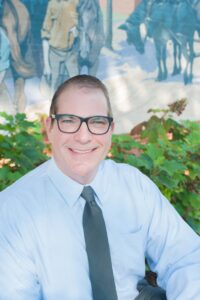
Dr. Jason Newell
Dr. Jason Newell is professor, program director, and the Dr. Jeannine Cannon Bozeman Endowed Chair of Social Work Education at The University of Montevallo. He received his B.A. in Psychology from Auburn University, M.S.W., with concentration in services to children youth and families, and Ph.D. in Social Work from the University of Alabama. Dr. Newell is a licensed independent clinical social work-supervisor (LICSW-S) and a private individual practitioner (PIP) with an endorsement in clinical and social casework. His research and specialty areas include clinical social work practice, self-care and professional resilience, practice with veterans and military families, men’s health and wellness, and child welfare.
Itinerary
Objective 1: Participants will conceptualize the self-care process from an ecological systems perspective as a holistic practice with components from various domains of the psycho-social self.
Objective 2: Participants will understand the empathy self-regulation process as it contributes to the cultivation of professional resilience and well-being.
Objective 3: Participants will have a conceptual and operational understanding of professional resilience and other associated terms, including posttraumatic growth, vicarious resilience, and compassion satisfaction.
Objective 4: Participants will understand the practice of self-care as an ethical obligation to providers and to the clients who are the recipients of their services.